
How to Search Essex County Court Records
Massachusetts runs one statewide case-access system, MassCourts eAccess. There is no separate Essex County portal. The state also publishes a plain-language guide on how to search court dockets, calendars, and case information. Both let you search by party name or case number across Essex County departments and locations. Online results are not exhaustive. Sealed, juvenile, adoption, impounded, and certain abuse-prevention records may not appear, or may appear in limited form.
Before you search, gather what you have. A full case number gives the cleanest result because it bypasses name-spelling mismatches. If you only have a name, know the court department and, if possible, the city where the matter was filed. A District Court criminal case in Lynn and a Superior Court indictment in Salem are separate records even when they involve the same person.
Follow these steps in order for the best result.
- Open the MassCourts eAccess portal and select the appropriate search path, such as criminal, civil, or probate and family.
- Choose the court department and Essex County location. Options include Superior Court, District Court, Probate and Family Court, Northeast Housing Court, and Juvenile Court, each with a specific session such as Salem, Lawrence, Lynn, Newburyport, Haverhill, Gloucester, Ipswich, or Peabody.
- Enter the case number if you have it. This skips name-spelling problems and returns the exact case.
- If you do not have a case number, search by last name and narrow by first name, court department, case type, and filing year or date range.
- Review the result rows for court, case number, party names, case type, filing date, and status.
- Open the case detail to see docket entries, scheduled hearings, parties, attorneys, and limited event information.
- For copies or documents the portal does not show, contact the clerk or register at the court location where the case is filed.
The Massachusetts Court System page provides an overview of the statewide Trial Court structure, including department roles and contact links for each court location.
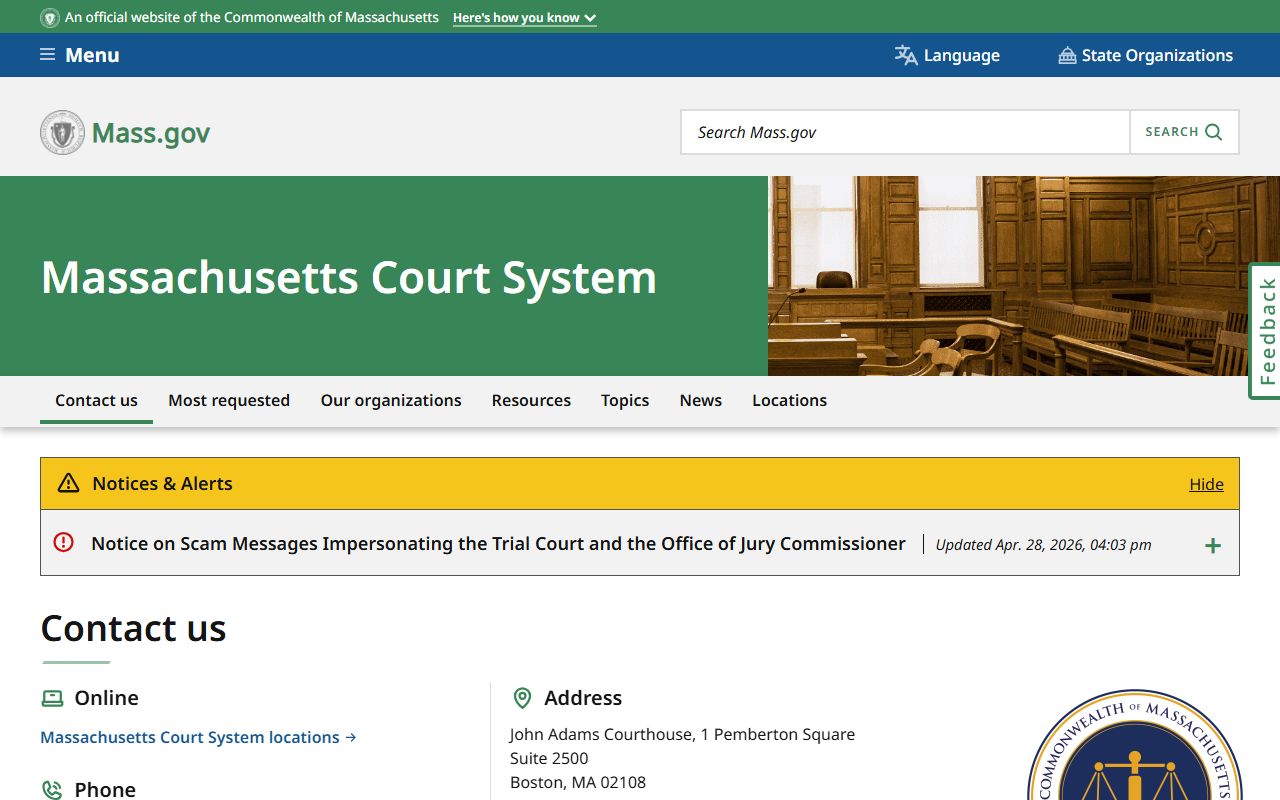
That Massachusetts Court System page is where court department information, location pages, and clerk contact details are organized, making it a useful second stop after running a MassCourts search for Essex County records.
Essex County Court Records Search Fields
MassCourts eAccess exposes a set of search fields that vary slightly by department path. The core fields are consistent whether you are searching a criminal matter in District Court, a civil suit in Superior Court, or a divorce in Probate and Family Court. Understanding each field saves time and reduces false matches. Court Department and Search Type are the two fields to get right before anything else. A missing or wrong department selection will send results from the wrong court entirely.
The table below reflects the field inventory documented in official portal behavior for public searches.
| Field Label | Type | Required | Notes / Format |
|---|---|---|---|
| Court Department | Dropdown / tab | Yes / conditional | Superior Court, District Court, Probate and Family Court, Housing Court, Juvenile Court, Land Court, or Boston Municipal Court depending on path. |
| Court Location | Dropdown | Optional / conditional | Essex options: Salem, Lawrence, Newburyport, Lynn, Haverhill, Gloucester, Ipswich, Peabody, Northeast Housing Court, and other sessions where configured. |
| Search Type | Tab / radio | Yes | Name search, case number search, or calendar/daily-list search. Labels vary by department. |
| Case Number | Text | Optional / conditional | Most precise search. Format varies by department and year; use exact punctuation. |
| Last Name / Business Name | Text | Optional / conditional | Party surname or entity name. Spelling must match the court index closely. |
| First Name | Text | Optional | Narrows a name search. |
| Middle Name / Initial | Text | Optional | Reduces false matches when available. |
| Date of Birth | Date | Optional / conditional | Often restricted or unavailable in public civil searches; may be used in criminal contexts subject to court rules. |
| Filing Date From | Date | Optional | Date range narrowing; MM/DD/YYYY format where exposed. |
| Filing Date To | Date | Optional | Use with Filing Date From to narrow large name-search results. |
| Case Type | Dropdown | Optional | Civil, criminal, small claims, summary process, divorce/support, guardianship, probate estate, etc., depending on selected department. |
| Case Status | Dropdown | Optional | Open, closed/disposed, active/inactive where exposed. |
| Calendar Date | Date | Optional / conditional | Used for daily-list or calendar searches. |
Note: Searching the wrong department is the most common mistake. A divorce filed in Probate and Family Court will not appear in a District Court search, even if both sessions are in Salem.
Types of Essex County Court Records
Essex County court records come from five Trial Court departments. Each department generates its own case files, and each type covers different legal matters. Most civil and criminal dockets are public in some form. Family, housing, and juvenile records carry more restrictions. Understanding which department holds the record you need is the first step toward finding it.
Criminal cases in Essex County are split between District Court and Superior Court by charge severity. A misdemeanor or initial-step felony complaint begins in District Court. A serious felony reaching indictment moves to Superior Court. Both departments maintain their own case files, so a person with both a complaint and an indictment may have records in two courts.
- Criminal records from District Court include complaints, arraignments, bail conditions, warrants, motions, dispositions, and probation orders for misdemeanors and preliminary felony stages.
- Superior Court criminal records include indictments, jury trial records, serious-felony sentencing, post-conviction motions, and appeals.
- Civil records from District and Superior Court cover contract and tort suits, small claims, supplementary process, civil motor-vehicle matters, and money judgments within each court's jurisdiction.
- Probate and Family Court records include divorce files, custody and support cases, guardianship and conservatorship petitions, probate estates, and name-change matters. See the Probate Records page for estate and guardianship details.
- Housing Court records from Northeast Housing Court cover summary process (eviction), code-enforcement, landlord-tenant, rent-escrow, and housing-injunction cases.
- Traffic and motor-vehicle records are filed in District Court as criminal motor-vehicle complaints or civil infractions brought to court. See Traffic Court Records for citation and license details.
Land records and marriage certificates are not court records. Deeds and mortgages are recorded at the Essex County registries of deeds. Marriage certificates start at city and town clerks. For more on those distinctions, see the Public Records page.
What Essex County Court Records Show
A court record is primarily a docket plus the filings behind it. The docket is the running, chronological list of every event in the case: filings, hearings, orders, motions, and outcomes. The public view on MassCourts is often docket-centered, meaning you may see the event log without being able to download underlying documents. For actual copies, you contact the clerk or register at the courthouse that holds the case.
Massachusetts courts restrict certain identifiers in all public records. Social Security numbers, bank account numbers, tax identification numbers, and the names and dates of birth of protected minors must be redacted by rule. Addresses of protected parties in abuse-prevention cases are withheld. Impoundment orders can shield specific documents, financial statements, or entire case sections from public view. What you see online is the publicly accessible portion, not always the full file.
| Field | What It Shows |
|---|---|
| Case Number / Docket Number | Department-specific identifier; exact format varies by court and filing year. Use it as-is with correct punctuation. |
| Court Department / Location | The Trial Court department and Essex session, such as Salem Superior Court or Lynn District Court. |
| Case Caption | Parties and their roles: Commonwealth v. Defendant (criminal), Plaintiff v. Defendant (civil), Petitioner v. Respondent (family/petition), Estate of Decedent (probate), Landlord v. Tenant (housing). |
| Filing Date | Date the complaint, petition, application, indictment, or notice was filed with the clerk or register. |
| Case Type | Civil action, criminal, small claims, summary process, divorce, guardianship, probate estate, support, contempt, motor vehicle, and others. |
| Case Status | Active/open, disposed/closed, dismissed, default, judgment, stayed, transferred, impounded, or sealed. |
| Parties and Attorneys | Names, roles, and attorney names where public; sensitive names and addresses may be withheld. |
| Docket Entries | Chronological events: filing, summons, return of service, motions, hearings, orders, judgments, appeals, and dispositions. |
| Hearings | Date, time, session/courtroom, event type, and judge/session where published. |
| Financials | Filing fees, judgment amounts, fines, restitution, assessments, bail, costs; online display varies by case type and department. |
| Documents | Complaint, answer, motion, order, judgment, decree, inventory; online document downloads are limited in Massachusetts and may require a clerk request. |
| Redactions | SSNs, financial accounts, birth dates, addresses of protected persons, medical details, minor identities, and impounded affidavits are excluded from public view. |
The Court Dockets page explains the docket format and how to read docket entries in more depth, including how to track hearing dates and status changes across Essex County sessions.
Public Access Framework for Essex County Court Records
Massachusetts splits public access into two systems, and the split matters for Essex County searches. The Public Records Law, codified at M.G.L. c. 66, § 10, governs requests to state agencies, municipalities, police departments, the sheriff's office, and city and town clerks. It sets response time, fee rules, and appeal procedures. Court case files are governed instead by court-specific rules: Trial Court Rule XIV is the primary framework for which court records are public and which are restricted. SJC Rule 1:19 then controls what can be accessed electronically versus only at the courthouse in person.
What that means in practice: a request for a police report goes through the Public Records Law channel. A request for a docket, a certified copy of a complaint, or a divorce judgment comes from the court clerk or register under court-access rules. The definitions of public records under M.G.L. c. 4, § 7 list the exemptions that can lead an agency to redact or withhold material. Knowing which system applies before you ask saves time and prevents a misdirected request.
Key Statutes for Essex County Court Record Access
M.G.L. c. 66, § 10: Public Records Law request procedure, response timing, fee estimates, and appeals to the Supervisor of Records. Applies to agencies and local government, not court case files.
M.G.L. c. 4, § 7: Defines public records and lists exemptions including privacy, investigatory, personnel, and other protected categories.
Trial Court Rule XIV: Uniform rules on which court records are publicly available, which are impounded, and how to request access to restricted material.
SJC Rule 1:19: Governs electronic access to court records and distinguishes what can be viewed online from what is accessible only at a courthouse terminal.
The image below is taken from the official Trial Court Rule XIV page on Mass.gov, which sets the uniform standards for public access to Essex County court records and all other Massachusetts Trial Court records.
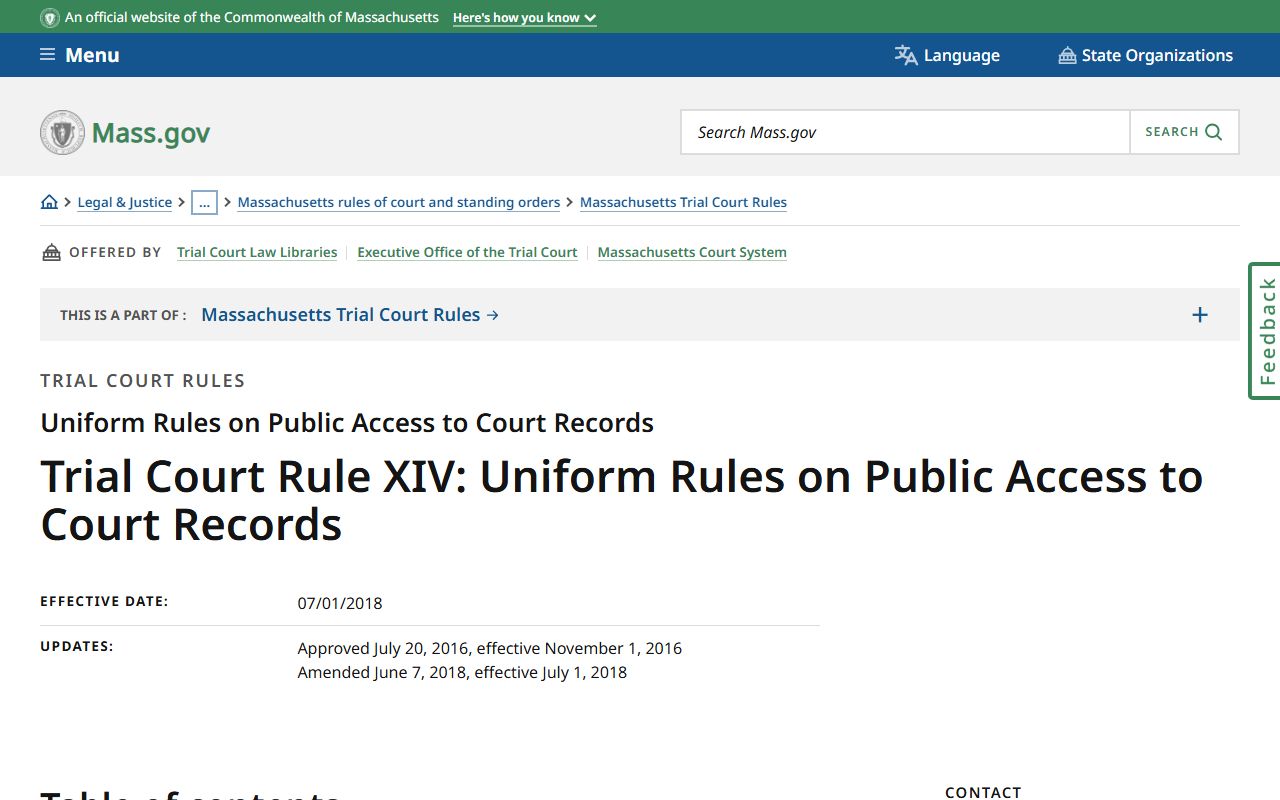
Trial Court Rule XIV is the document that clerks and judges apply when a request for impounded or restricted material is made in any Essex County court, so reading it helps set realistic expectations before you file a request.
Records That Are Sealed or Confidential in Essex County
Not every Essex County court record is publicly accessible. Some are sealed, some are impounded, and some are confidential by statute. These are not the same thing. Sealed records still exist and remain available to courts, police, and probation under defined circumstances. Impounded records are restricted by a judge's order, sometimes covering only one document in an otherwise public file. Expunged records are removed more completely through a narrower statutory process.
Juvenile Court records are among the most restricted. Delinquency, care-and-protection, CHINS/CRA, and youthful-offender files are protected by statute and court rule. Adoption records are restricted under M.G.L. c. 210, § 5D. Abuse-prevention order files under M.G.L. c. 209A may contain protected addresses, affidavits, and safety plans that are withheld. Grand-jury proceedings are secret until an indictment becomes public at defined points. Mental-health commitment and medical records are protected by court rules and health privacy law.
For criminal record sealing, M.G.L. c. 276, § 100A allows sealing after statutory waiting periods tied to offense type. M.G.L. c. 276, § 100C covers sealing when proceedings end in not-guilty, no-bill, no-probable-cause, or dismissal outcomes. Expungement under M.G.L. c. 276, § 100E is narrower and has specific statutory eligibility limits. To petition for sealing or expungement, a person generally files in the Essex County court that handled the case, supplies identifying case information, and may need to demonstrate eligibility or hardship. Common denial reasons include ineligible offense type, insufficient waiting period, pending charges, or an incomplete petition. See the Arrest Records page for more on the sealing process and CORI rules.
In-Person Court Record Requests in Essex County
When MassCourts does not show the document you need, the court clerk or register is the right contact. Massachusetts does not have one county clerk for all records. Each Trial Court department and location has its own office. For Superior Court matters, the Essex Superior Court Clerk in Salem is the custodian. For Probate and Family Court records, the Register of the Essex Probate and Family Court handles copies. District Court matters belong to the clerk-magistrate at whichever District Court session holds the case. Knowing the correct office before you go saves a wasted trip.
The copy-request process works best when you come prepared. A good request includes the court department and location, the full case or docket number, the case caption with party names, the document name if known, the filing date or approximate date, whether a certified or plain copy is needed, and your contact and payment information. Certified copies have clerk certification and are often required for legal use. A plain copy may suffice for personal reference. An exemplified copy carries higher authentication for out-of-state or formal legal purposes. A docket printout shows the chronological entry log but is not the same as the underlying documents.
Essex Superior Court Clerk
56 Federal Street
Salem, MA 01970
Essex Probate and Family Court
Salem and Lawrence sessions
Salem, MA
Northeast Housing Court
Housing, eviction, and code matters
Essex County
For District Court matters, the correct session depends on where the case was filed. Essex County has District Court sessions in Salem, Lynn, Lawrence, Haverhill, Gloucester, Ipswich, Peabody, and Newburyport. Each has its own clerk-magistrate office. See the District Court page for addresses and contact links for each session.
Note: Fees for court copies are set by the current Trial Court fee schedule and can differ by department and document type. Confirm the current fee with the clerk before you pay.
Federal Courts Serving Essex County
Essex County is within the jurisdiction of the U.S. District Court for the District of Massachusetts. Federal cases are entirely separate from Massachusetts Trial Court cases. Federal court handles federal crimes, federal civil-rights claims, federal-question civil cases, diversity cases meeting jurisdictional thresholds, bankruptcy-related district matters, habeas petitions, and other federal statutory matters. Ordinary Essex County divorce, probate, eviction, local misdemeanor, and state felony prosecutions stay in state court unless a federal issue creates federal jurisdiction.
Federal bankruptcy cases go to the U.S. Bankruptcy Court for the District of Massachusetts. Appeals from the District of Massachusetts go to the U.S. Court of Appeals for the First Circuit. The federal electronic records system is PACER. Users create an account, search by party name, case number, or court, and may incur per-page fees unless exempt or below the quarterly fee-waiver threshold. The PACER Case Locator lets you search across all federal courts, while CM/ECF is the filing system used by attorneys.
The screenshot below was captured from the U.S. District Court for the District of Massachusetts website, the federal court that serves Essex County alongside the rest of Massachusetts.
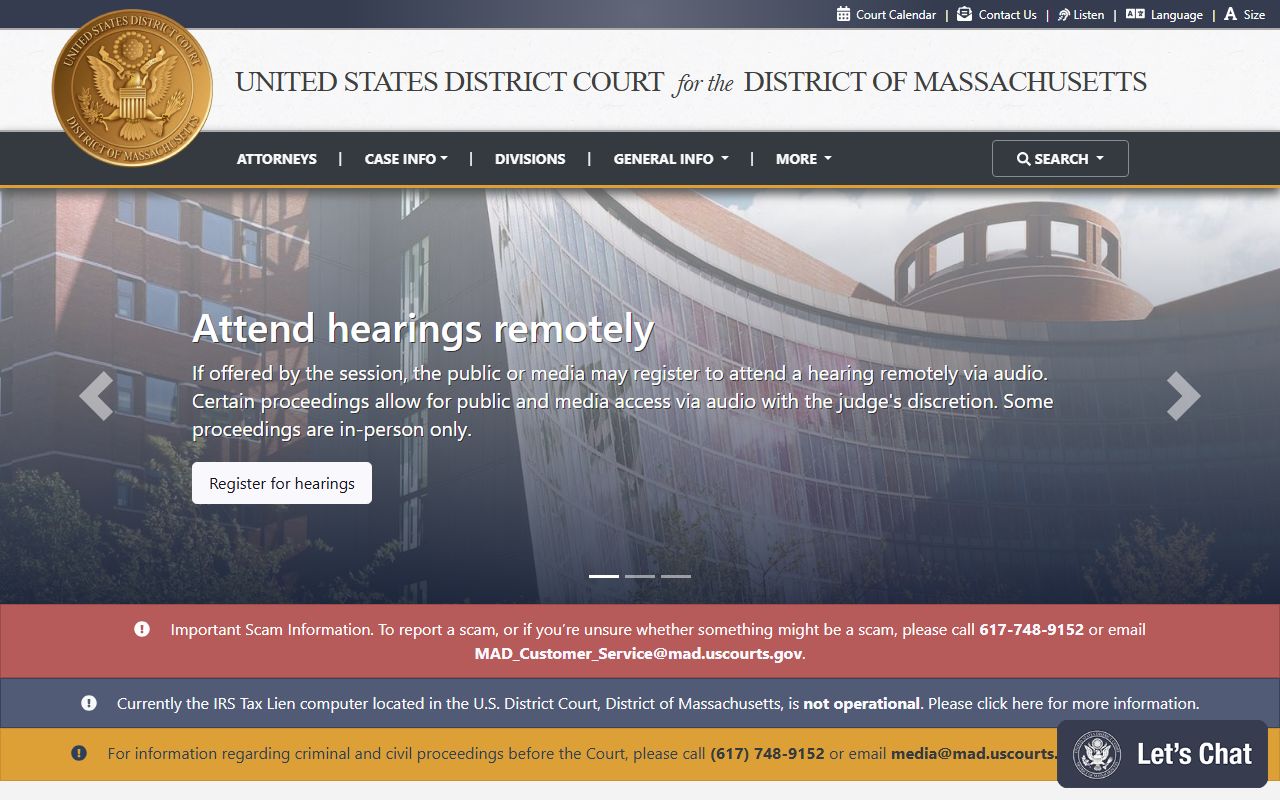
That court site is the starting point for locating federal cases involving Essex County parties, including federal criminal, civil, and habeas matters filed in the District of Massachusetts.
The image below is from PACER, the official federal courts electronic access system used to search and retrieve federal case records, including those from the District of Massachusetts.
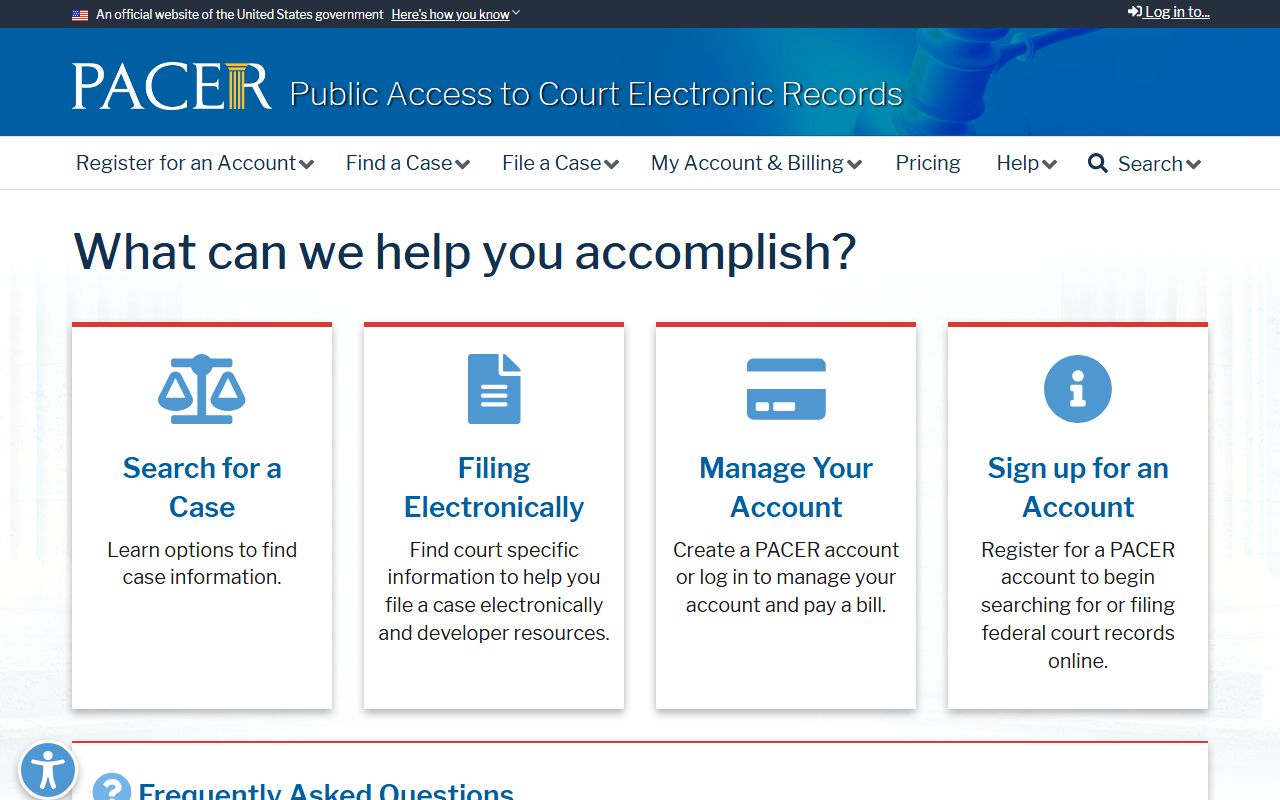
PACER is where you retrieve federal dockets, complaints, orders, and judgments. It is separate from MassCourts and is used only for federal, not state, court records in Essex County.
Federal custody and enforcement resources connected to Essex County include the Bureau of Prisons inmate locator, the U.S. Marshals District of Massachusetts, and the U.S. Attorney for the District of Massachusetts. These offices handle federal detention, fugitive matters, and federal prosecution, which are distinct from Essex County sheriff custody and Essex County court prosecution.
Reading Essex County Court Records Correctly
Docket language is terse. A few status labels carry most of the meaning, and mixing them up leads to wrong conclusions. "Commonwealth v." means a Massachusetts criminal case. "Plaintiff v. Defendant" is usually civil, housing, or small claims. "Petitioner v. Respondent" shows up in family, probate, restraining-order, and petition-based matters. "Estate of" points to probate. "Summary Process" almost always means eviction.
Watch the status words closely. "Continued" means the hearing was rescheduled, not that the case was dropped. "Disposed" means the case has an outcome, but you must read the individual docket entries for the actual result. "Default" can mean a missed court date. In criminal or motor-vehicle cases, a default may carry a warrant or have license consequences. "Impounded" means the public record is restricted in whole or in part by court order.
The most important distinction: a charge is not a conviction. An arraignment, a complaint, or an indictment means a person was accused. The disposition line in the docket tells you what actually happened, whether that was dismissal, a guilty finding, a not-guilty finding, or some other outcome. Never treat an open or unresolved criminal docket entry as a confirmed conviction.
- Arraignment
- First criminal court appearance where charges and bail conditions are addressed.
- Disposition
- The outcome of a charge or case, such as guilty, not guilty, dismissed, defaulted, or continued without a finding.
- Continuance
- Postponement of a hearing or trial to a later date.
- Impoundment
- A court order limiting public access to particular case materials.
- Sealing
- Restricting public access while the record remains available to authorized users such as courts and law enforcement.
- Expungement
- Statutory erasure or removal of a qualifying record, more complete than sealing.